#image_title
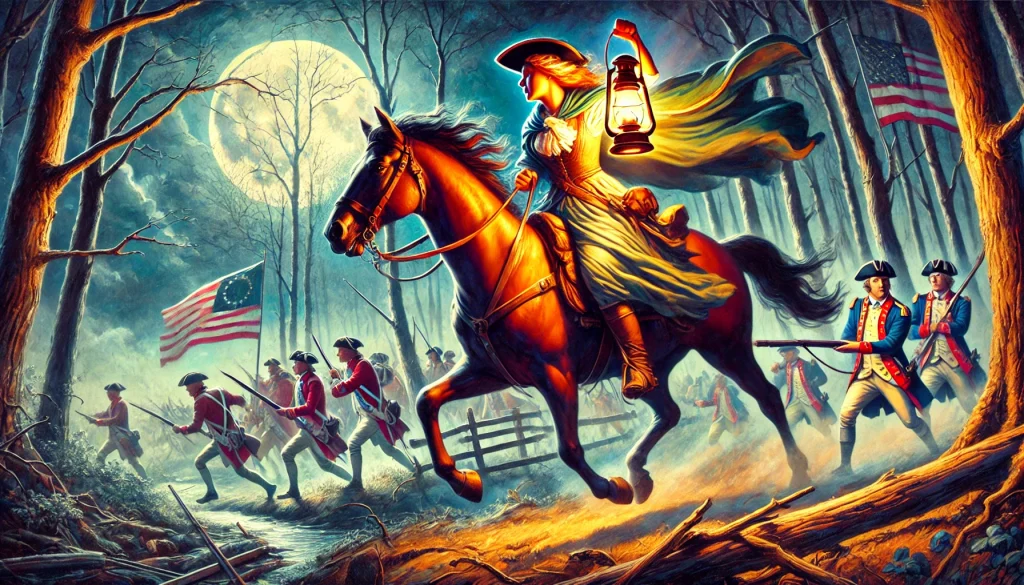
Kate Barry, also known as Catherine Moore Barry, helped carry Daniel Morgan’s call for militia before the Battle of Cowpens on January 17, 1781. She rode through the South Carolina backcountry and served as a scout for Patriot forces. Her work made her one of the Revolutionary War’s remembered women, although some dramatic details of her story belong to later tradition.
Who was Kate Barry?
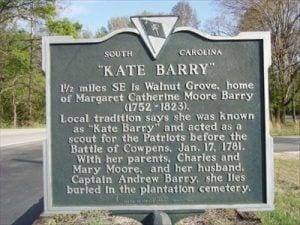
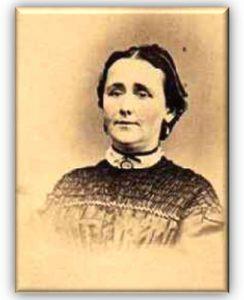
Margaret Catherine Moore Barry lived at Walnut Grove in what is now Spartanburg County, South Carolina. She was the daughter of Charles and Mary Moore and the wife of Andrew Barry, a captain in the Patriot militia. Histories also call her Katy or Catherine Moore Barry. Sources disagree about her birthplace: the South Carolina Encyclopedia places it in County Antrim, Ireland, while the American Battlefield Trust says she was born near Spartanburg. Both associate her family with Walnut Grove.
What did Kate Barry do before the Battle of Cowpens?
As British troops pursued Morgan through the backcountry, he needed local militiamen to join him. According to the South Carolina Encyclopedia, Kate Barry helped carry his summons through the neighborhood and scouted for the Patriots. Local knowledge, swift communication, and militia support mattered in the days before Morgan faced Banastre Tarleton at Cowpens.
On January 17, 1781, Morgan’s regulars and militia defeated Tarleton’s force. The National Park Service’s history of the Southern Campaign places Cowpens among the consequential American victories in the South. Barry’s story concerns the effort to rally support before the fighting; her precise movements on the battlefield have not been established.
What is legend, and what is supported?
A familiar account says Barry tied her baby to a bedpost and rode through the night to warn neighbors. The American Battlefield Trust presents that episode as a rumor. Stories also place her beside her husband on the battlefield or describe later medals, but these details should not be treated as established fact. The National Park Service names Kate among South Carolina’s Revolutionary heroines while cautioning that fact and tradition can be difficult to separate in such accounts.
The firmer historical point is compelling on its own: a woman in the backcountry helped summon militia and scout for the Patriot cause before a pivotal battle.
Why is she remembered?
Barry died in 1823 and was buried at Walnut Grove, according to the South Carolina Encyclopedia. Poetry and monuments later celebrated her ride. Her legacy also points to work often missing from battlefield accounts: carrying news, navigating local roads, and gathering neighbors in time to act. Those contributions belong in the history of the American Revolution, even when a memorable legend cannot be verified.
Further reading: South Carolina Encyclopedia biography, American Battlefield Trust biography, and Cowpens National Battlefield resources.

More Stories
The “Appeal to Heaven” Flag: Revolutionary War Symbol in Today’s Headlines
A Military Coup Threatened
Iowa Approves ‘Dont Tread on Me’ License Plate: Join the Movement